
Remodeling for the Future: Design Tips for Aging in Place
A thoughtfully modified residence allows individuals to remain safe, comfortable, and independent as their lifestyle needs evolve. Planning home modifications early helps property owners avoid rushed emergency renovations while creating spaces that remain functional across every phase of life. Partnering with a licensed home remodeling contractor allows homeowners to introduce subtle, elegant adaptations that blend everyday convenience with long-term accessibility. These strategic adjustments support personal mobility, reduce common domestic hazards, and preserve the emotional comfort of living in familiar surroundings.
Planning Early for Long-Term Living
Preparing a residence for future physical changes requires looking ahead before mobility challenges arise. Gradual changes made during routine updates protect personal independence and reduce the stress of sudden lifestyle shifts. According to Gitnux, 55% of homeowners plan to remodel within the next two years. Incorporating accessibility considerations into those scheduled home updates saves money, minimizes future disruption, and increases overall property value.
When planning ahead, homeowners benefit from looking at their floor plans through a practical lens:
- Identifying physical barriers that could limit mobility later, such as narrow doorways, raised thresholds, and steep exterior steps.
- Evaluating everyday movement patterns between key rooms, including the kitchen, primary bedroom, and main living area.
- Prioritizing main-level living spaces so daily routines do not depend entirely on navigating flights of stairs.
- Selecting durable, slip-resistant materials that reduce the likelihood of accidental slips and falls.
Working with an experienced home remodeling contractor during the initial planning phase provides valuable insight into structural possibilities. Professional builders identify load-bearing walls, assess plumbing configurations, and recommend practical layout adjustments tailored to unique household needs.
Upgrading Entryways and Hallways for Easy Movement
Entering and moving through the house should feel effortless for residents and guests alike. Standard residential hallways and doorways often create friction for individuals using walkers, canes, or wheelchairs. Widening interior openings to at least 36 inches provides ample clearance, while removing raised interior thresholds creates smooth transitions across different flooring surfaces.
Exterior access is equally critical for lasting comfort. Zero-step entryways eliminate the trip hazard of traditional porches and stoops, blending clean architectural lines with practical accessibility:
- Installing gently graded walkways that rise gradually toward the primary entrance without sharp incline changes.
- Replacing traditional knob hardware with easy-to-use lever handles that require minimal grip strength.
- Adding covered entryway overhangs to shield arriving residents from wet weather, wind, and direct sunlight.
- Installing sturdy exterior handrails along both sides of any remaining exterior steps to support steady balance.
Creating continuous, unobstructed pathways through main corridors minimizes everyday strain. Wider pathways also simplify moving furniture, carrying groceries, and managing daily domestic tasks.
Redesigning Bathrooms for Safety and Comfort
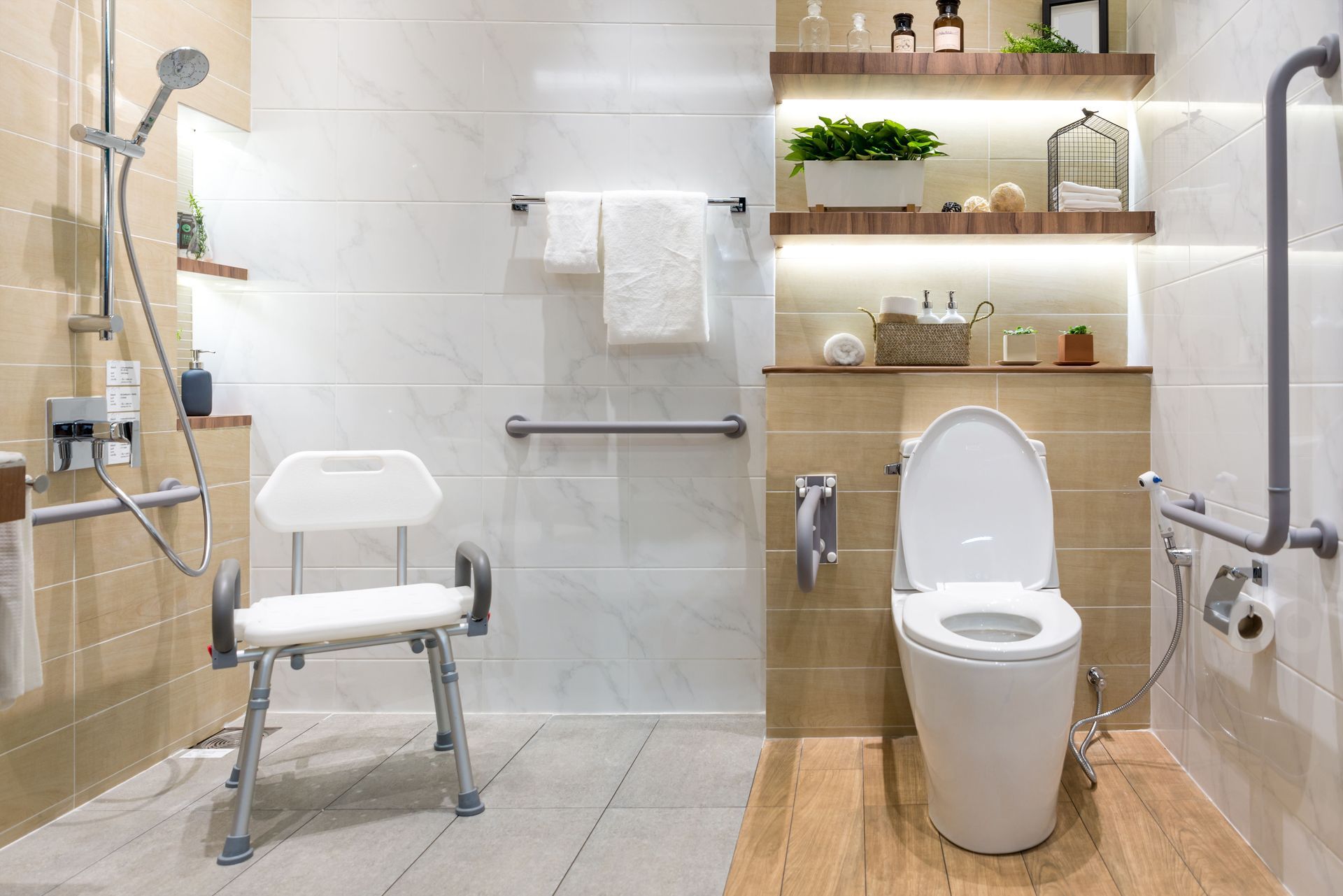
Bathrooms present some of the most frequent safety concerns for older adults due to slick surfaces, tight enclosures, and hard materials. Transforming a standard bathroom into a secure, accessible environment does not mean sacrificing modern design. A qualified home remodeling contractor can configure luxury finishes that seamlessly integrate supportive, health-conscious features.
Eliminating high tub walls is one of the most effective ways to lower accident risks:
- Curbless walk-in showers with linear drains eliminate tripping hazards and accommodate bench seating.
- Slip-resistant tile flooring with a textured finish provides steady traction underfoot, even when wet.
- Built-in wall blocking installed behind drywall allows for secure grab bar placement whenever support becomes necessary.
- Handheld, adjustable showerheads allow seated or standing bathing without awkward stretching.
Comfort-height toilets, which sit two to three inches higher than standard fixtures, reduce knee and hip strain during daily use. Installing vanity counters at varying heights accommodates both seated grooming routines and standing access. Single-handle or motion-activated faucets eliminate the twisting motions required by two-handle fixtures, making handwashing quick and painless for individuals dealing with joint stiffness.
Adapting Kitchens for Accessible Daily Living
The kitchen functions as the heart of the home, but standard cabinetry and deep countertops can challenge reaching, bending, and lifting. Adapting a kitchen for long-term comfort focuses on positioning essential tools, appliances, and work surfaces within easy physical reach.
Thoughtful modifications allow cooking and meal preparation to remain enjoyable, social activities:
- Installing pull-out shelving, multi-tier organizers, and deep drawers instead of deep, low base cabinets.
- Choosing induction cooktops that heat only cookware, significantly reducing the hazard of accidental burns.
- Lowering a section of the countertop to a seated height of 30 inches to permit comfortable meal prep from a stool or chair.
- Placing the microwave and wall oven at counter height to eliminate the need for dangerous overhead lifting.
- Selecting French door refrigerators with pull-out freezer drawers for effortless visibility and quick access.
Plumbing fixtures also benefit from functional adjustments. Deep sink basins paired with hands-free or touch-sensitive faucets make washing dishes simpler for hands affected by arthritis. Shallow sink designs with rear drains provide knee clearance underneath for seated preparation, protecting homeowner posture during daily tasks. When reconfiguring these mechanical lines, an experienced home remodeling contractor verifies that all supply lines and drain runs meet current plumbing codes and local building standards.
Improving Lighting and Smart Controls Throughout the Home
Vision naturally changes with age, requiring higher illumination levels to distinguish contrast, read labels, and identify changes in floor elevation. Strategic lighting upgrades eliminate dark corners and shadows, significantly lowering the risk of accidental missteps.
A comprehensive residential illumination plan combines multiple layers of lighting to support different daily tasks:
- Installing ambient, recessed LED ceiling fixtures that spread balanced, glare-free light across entire rooms.
- Adding under-cabinet task lighting in kitchens, workshops, and laundry areas to illuminate work surfaces directly.
- Placing automated, low-level nightlights in hallways, staircases, and bathrooms to illuminate pathways after dark.
- Installing rocker-style wall switches, which are easier to operate using an elbow or palm than traditional toggle switches.
Smart home technology provides an additional layer of convenience and peace of mind. Voice-activated controls, smart thermostats, and automated window coverings allow homeowners to control their indoor environment without walking across the room or straining to adjust manual controls. Smart doorbells and video intercoms let residents confirm visitors at the front door before standing up, supporting home security without requiring rushed movements toward the door. Illuminating interior stairways with recessed step lighting further reduces tripping risks during evening hours.
Hiring the Right Professional for Lasting Results
Aging-in-place remodeling involves structural changes, specialized mechanical work, and strict safety guidelines. Because structural modifications often involve load-bearing partitions, electrical rerouting, and precise plumbing relocations, these tasks require the oversight of an established general contracting company. Consulting a professional home remodeling contractor protects your investment and confirms that every adaptation adheres to safety regulations, structural standards, and local building codes.
Professional builders manage the complete construction process, from initial architectural design and permit acquisition through rough-in trades and finish carpentry. Their experience allows homeowners to incorporate universal design principles subtly, preserving home aesthetics while significantly improving day-to-day usability. Investing in qualified construction services today eliminates the need for expensive structural corrections down the road, giving homeowners enduring peace of mind.
Thoughtful home renovations protect personal autonomy, comfort, and safety for decades to come. By planning modifications early, upgrading entry points, adapting high-traffic rooms, and enhancing interior lighting, homeowners can comfortably enjoy their residences well into retirement. When you are ready to prepare your home for the years ahead with functional, reliable design, contact a reliable home remodeling contractor at ACE Construction, Roofing, Fence & Plumbing.








Share On: